We noticed that you were on the American continent, would you like to be redirected to our US site?
HomeJournal How to set up a home office with brutalist furniture
October 08, 2026
How to set up a home office with brutalist furniture
How to Set Up a Home Office: 5 Simple Brutalist Ideas
Setting up a home office is rarely about the desk. The desk is easy to find. The real problem is everything else: files, books, cables and objects that pile up on the work surface because they have nowhere else to go.
Brutalist furniture offers a fairly direct answer. Simple volumes, raw materials, little ornament.
Pieces that store things without drawing attention to themselves.
Here are five ideas for a home office built on that logic, whether it is a dedicated room or a corner of the living room.
Start your home office with storage
A cluttered office is almost always an office without enough storage within reach. Before choosing a desk, count what needs a place: binders, reference books, printer, supplies.
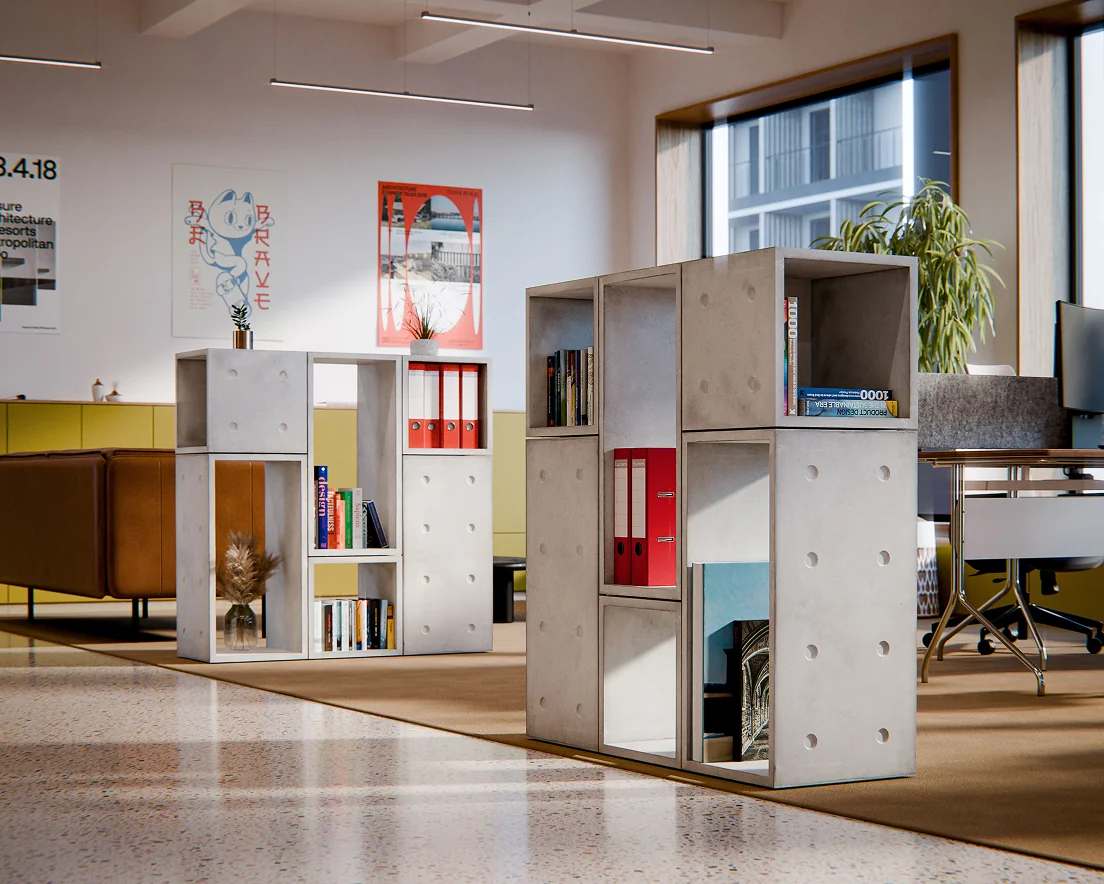
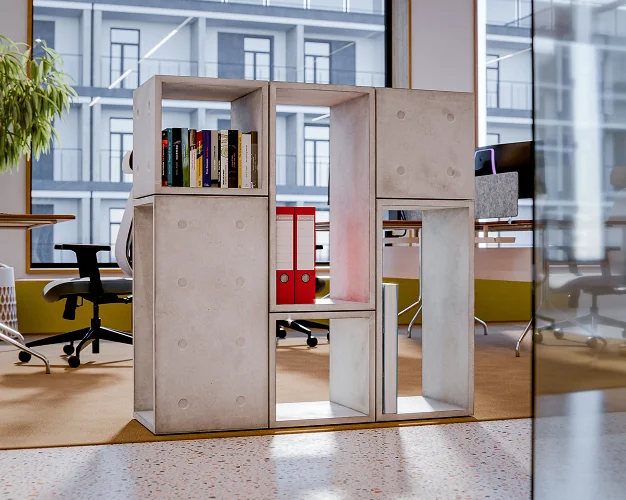
A modular system lets you fit the storage to that volume rather than the other way round. The Dice system works this way: concrete cubes assembled to fit the available space, adding or removing modules as needed.
The Dice modules that work as office storage today can become a bookcase or a low sideboard the day the room changes use.
2. Divide the space without building a wall
Many home offices sit in a room that also serves another purpose: a living room, a bedroom, a hallway. A partition blocks light and makes the room feel smaller. A dividing piece of furniture does the same job without closing the space.
An open bookcase set perpendicular to the wall marks out the work corner while keeping sightlines open. It holds work things and leaves a few books and objects visible from the rest of the room.
Concrete has an advantage here. Its mass gives the piece the presence of a low wall, which marks the division more clearly than a light shelving unit.
3. Use the wall above the desk
The wall facing the desk often stays empty, yet it is the most practical place for things you use every day. One or two wall shelves are enough to clear the work surface.
The Sliced shelves come in several lengths, from Sliced 300 to Sliced 1200. They can form a staggered series or a continuous line above the desk.
Before installing them, check what your wall is made of. A concrete shelf needs suitable fixings, as explained in our concrete shelf buying guide.
4. Give small items a place
Much of the mess comes from small things: magazines, catalogues, mail, notebooks. They do not belong in a large piece of furniture and end up stacked on the desk.
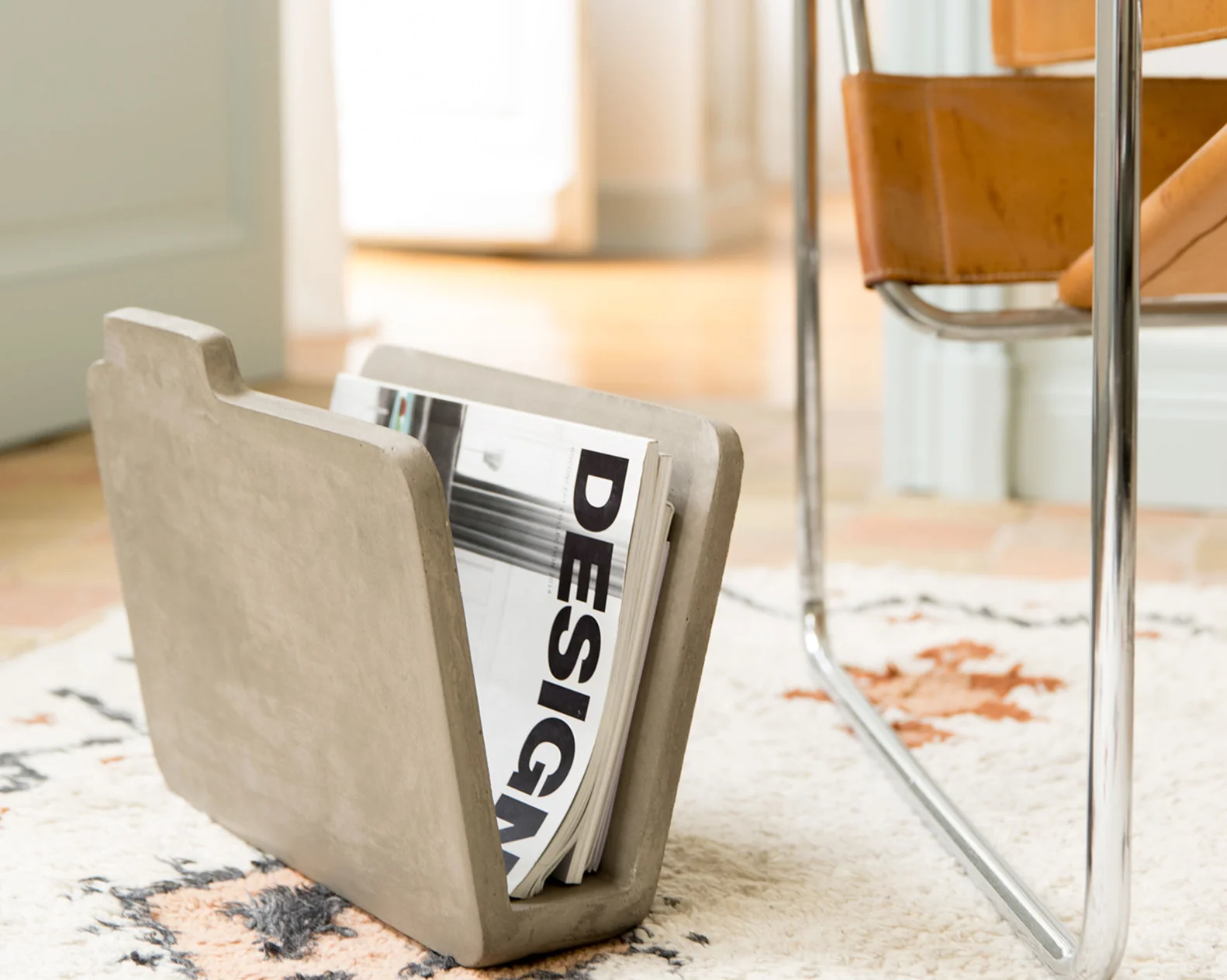
A magazine rack next to the desk solves part of the problem. Doc, in concrete, keeps magazines, catalogues or records upright without taking up space on the work surface.
5. Choose a material that calms the eye
An office gathers a lot of visual elements: screens, cables, papers, coloured folders. Heavily designed or brightly coloured furniture adds more noise.
Raw concrete does the opposite. Its grey tone and matte surface act as a neutral background against which everything else reads more easily. That is one of the principles of brutalist furniture: simple volumes and a material left visible, with no added decoration.
Paired with wood for the work surface or with a few plants, concrete avoids the cold look it is often associated with.
Frequently asked questions about a concrete home office
Can concrete furniture work in a small home office?
Yes, as long as the pieces are sized for the room. A modular system lets you install only the modules you need, and wall shelves keep the floor clear.
How do you combine concrete and wood in an office?
The simplest approach is to keep wood for the surfaces you touch, such as the desk top, and concrete for storage volumes. The two materials complement each other well.
Can concrete furniture hold the weight of files and books?
For a wall shelf, the fixing is what mainly sets the maximum load, which is why wall plugs suited to the wall matter. For freestanding furniture, check the load stated on the product page.
How do you care for concrete furniture in an office?
A slightly damp cloth is enough day to day. For stains and the protective treatment, see our article on caring for concrete furniture.