Cart

0

Subtotal

EUR 0

GO TO THE
AMERICAN
WEBSITE
We noticed that you were on the American continent, would you like to be redirected to our US site?
Home
Journal
The return of true brutalism in contemporary furniture

March 11, 2026

The return of true brutalism in contemporary furniture

Brutalist Furniture : why raw concrete never really went away

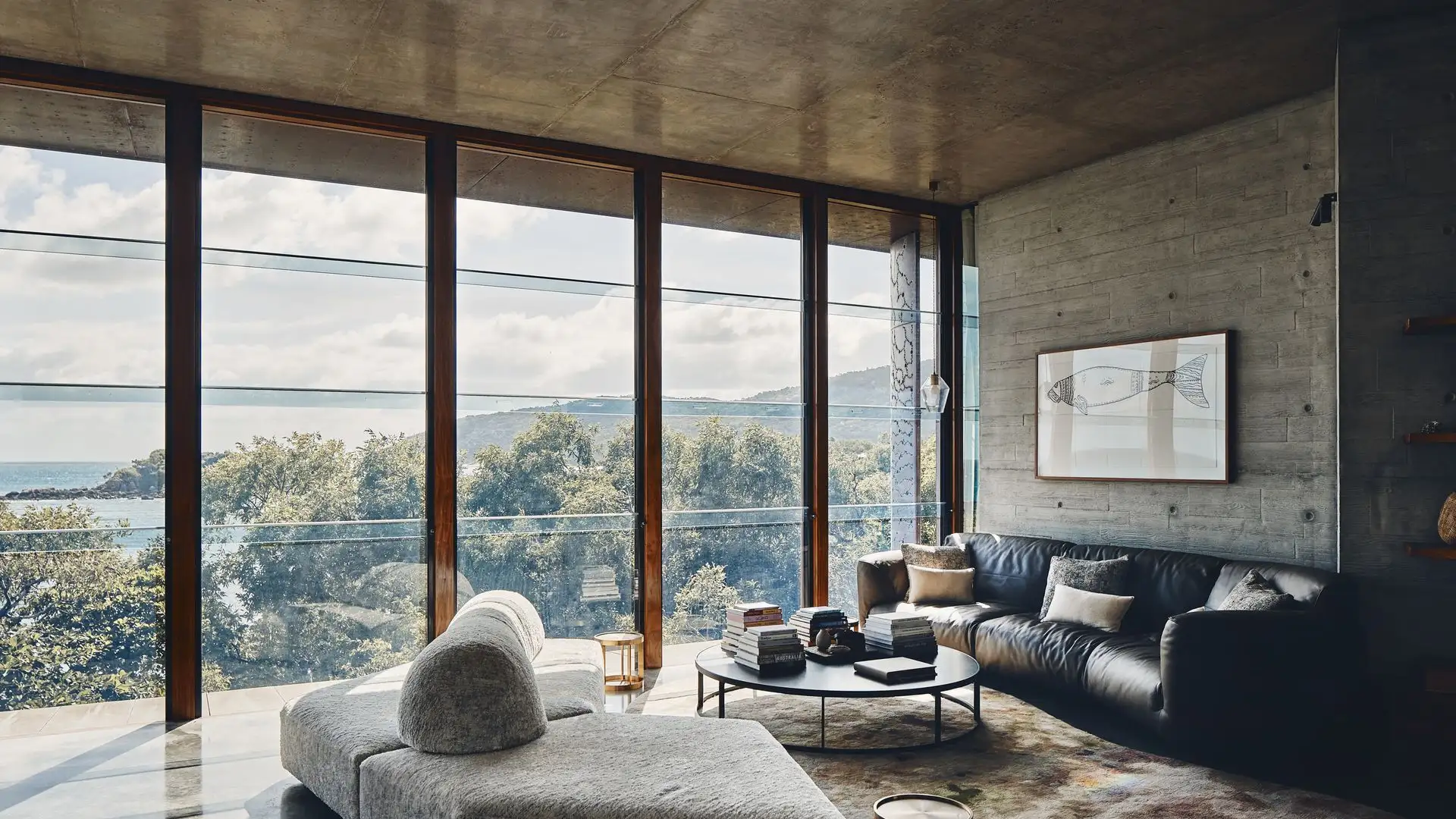
Contemporary living room with brutalist furniture and panoramic floor-to-ceiling window

The return of brutalism in contemporary furniture

Brutalism was long confined to concrete façades of the 1960s — the kind of buildings that divide opinion, that some love and others want torn down. And yet, it’s coming back. Not in the streets, but in living rooms, offices, and everyday spaces.

Why now? Probably because people are tired of objects that say nothing. Interchangeable, smooth furniture that disappears into the background. Brutalist furniture does the opposite. It asserts itself. It takes up space. It owns what it is.

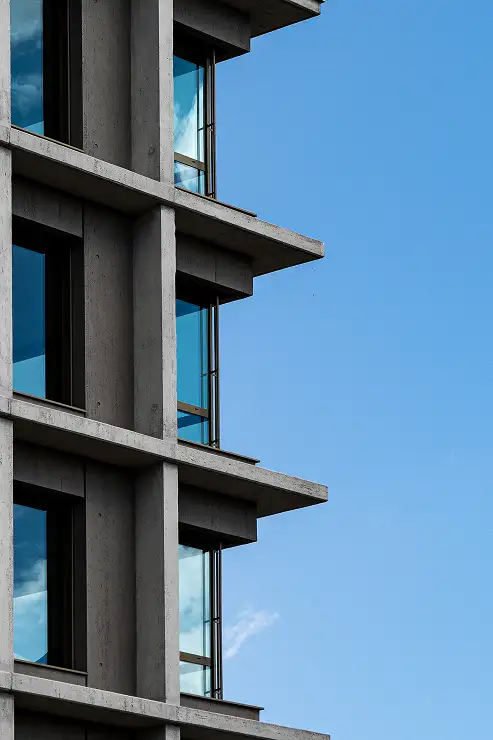
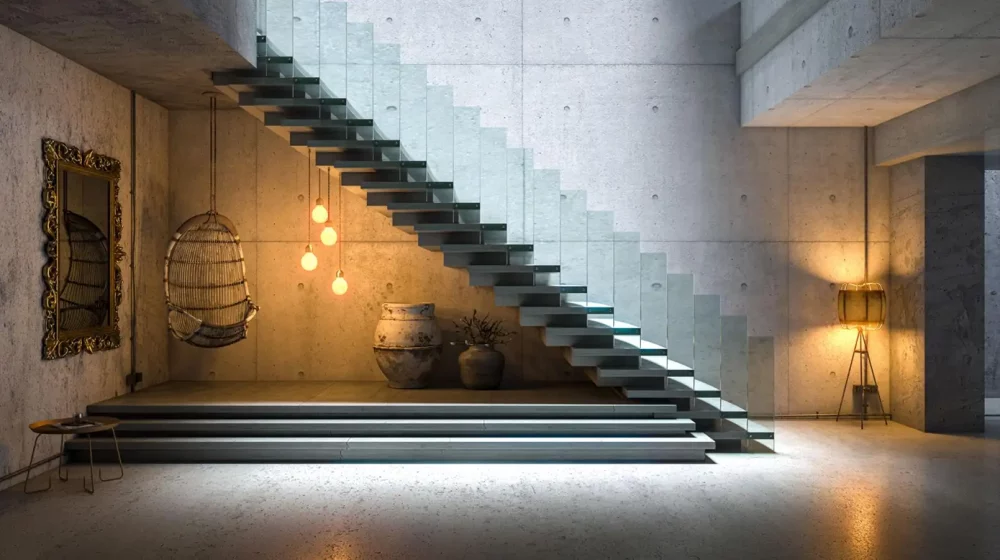
Brutalist building facade in raw concrete, 1960s architecture

Where does brutalism come from?

The word comes from French. Béton brut — raw concrete — the expression Le Corbusier used to describe a material left as it is, without covering it, without disguising it. Brutalist architecture of the 1950s to 70s built on that idea: show the structure, don’t hide it. Beams stay visible. Concrete keeps its formwork marks. Nothing is concealed.

It’s almost a moral stance. The honesty of the material against superfluous decoration.

Designers transposed this logic to furniture. Same principles: pieces that show how they hold together, materials that don’t pretend to be anything other than what they are.

What concrete changes in design

Working with concrete to make furniture means thinking about an object differently. You don’t cut, you don’t assemble. You cast. The form comes out of the mold as a single piece.

That changes everything. Volumes can be freer, more sculptural. There’s no joint to hide, no screw to conceal. The piece exists as a whole.

The Dice modular system, designed by Alexandre Dubreuil, works exactly on this idea. Stackable, combinable concrete cubes. Each configuration creates a different structure. It’s furniture conceived as small-scale architecture.

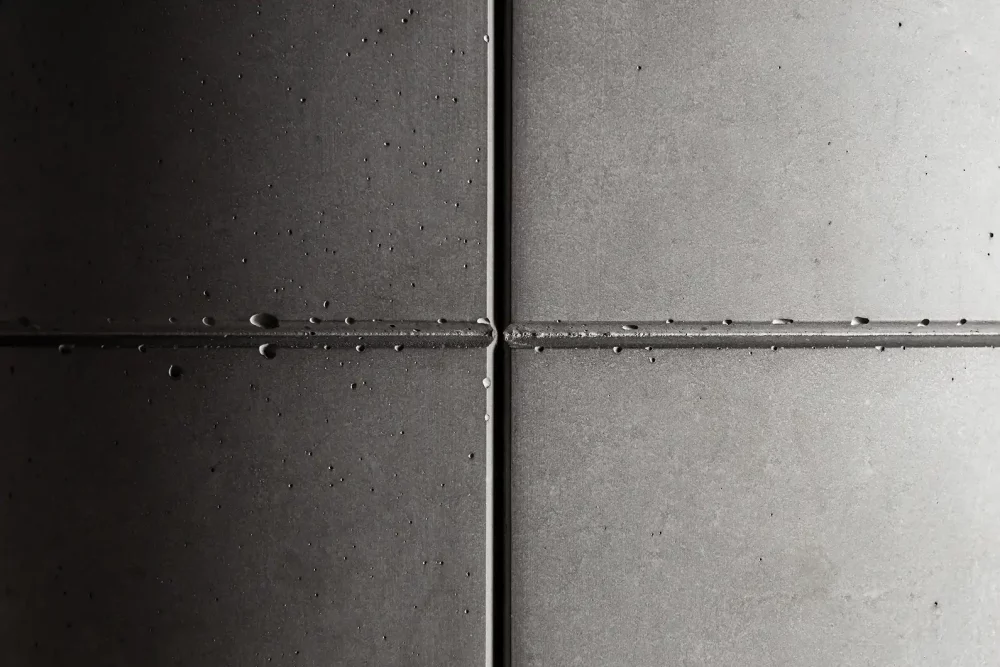
The material itself has a character that few materials have. The microbubbles on the surface, the variations in tone, the slight irregularities from casting. Two pieces made with the same formula will never be identical. That’s what makes concrete design unlike anything else.

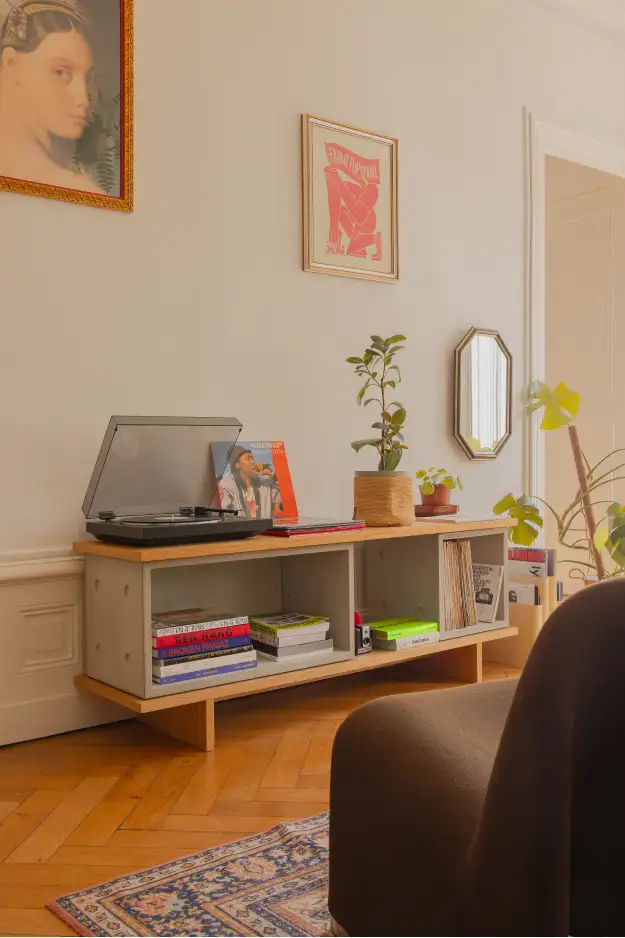
Modular shelving system in a bright contemporary interior — Lyon Béton
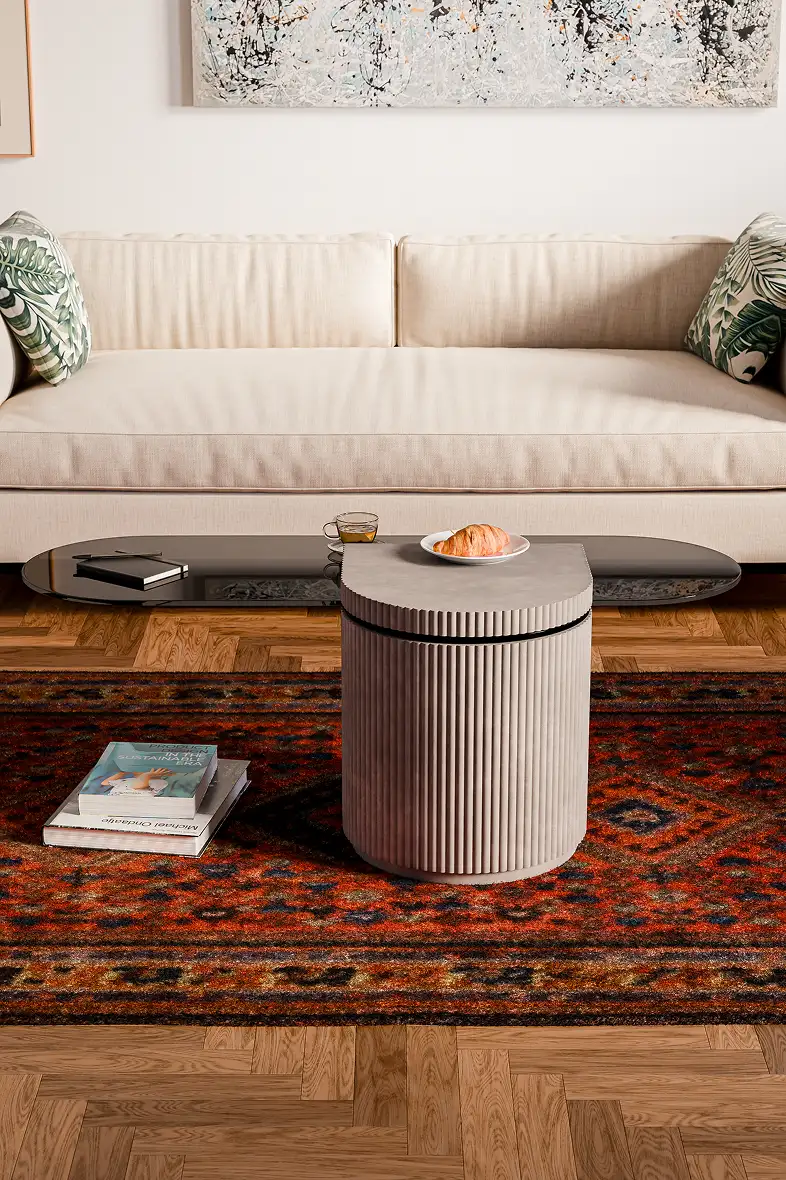
Concrete coffee table in a warm living room with Persian rug and wood parquet

Brutalist furniture between design and sculpture

Some concrete pieces would look as at home in a gallery as in a living room.

Bertrand Jayr’s Strut coffee table works on exactly that register. A massive concrete base, a glass top. The apparent weight at the bottom against the lightness above. It’s a very simple visual tension, and a very effective one. The top seems to almost float.

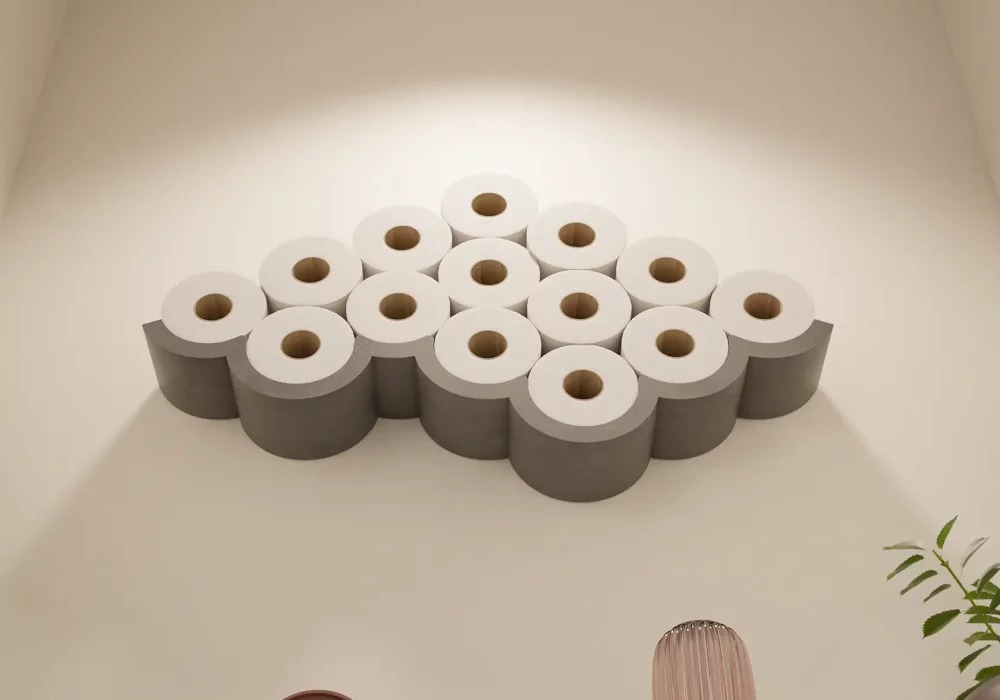
The Cloud shelf, by the same designer, pushes this further. A cloud shape sculpted in concrete, for an everyday object. It’s offbeat. It’s witty. And it shows that brutalism doesn’t have to be austere — it can be ironic, poetic, light in its relationship to objects even when the material is heavy.

Cloud concrete shelf, cloud shape by Bertrand Jayr — Lyon Béton

How to integrate brutalist furniture into an interior

The question people often ask: won’t concrete make the space feel cold? In most cases, no. As long as you don’t overdo it.

Concrete works very well alongside wood, leather, linen. The mineral material needs something warm next to it to find its balance. Not an absolute rule, but it’s usually what works.

Some concrete situations:

In a minimalist living room, a concrete coffee table becomes the visual center of gravity. Everything organizes itself around it.

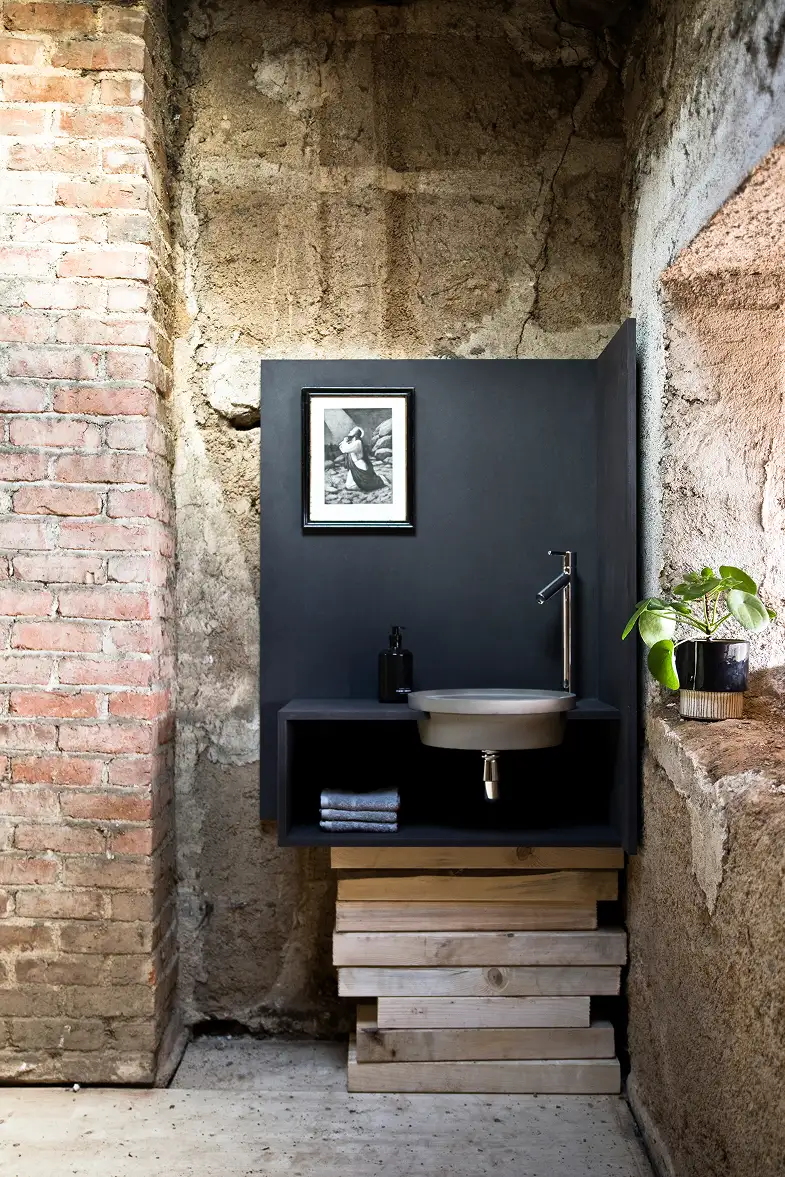
In a bathroom, a concrete sculpted basin completely changes how the space reads. It’s no longer a fitting, it’s an architectural volume.

In a home office, a modular concrete shelving system structures the space and gives it a strong character without needing much else.
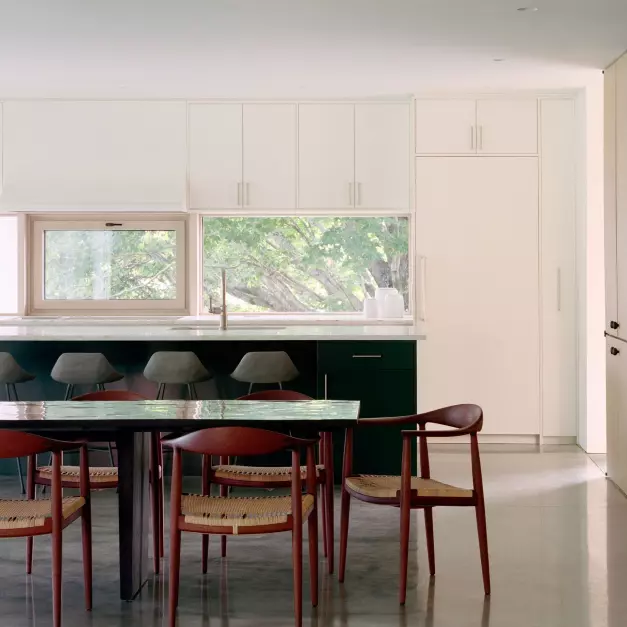
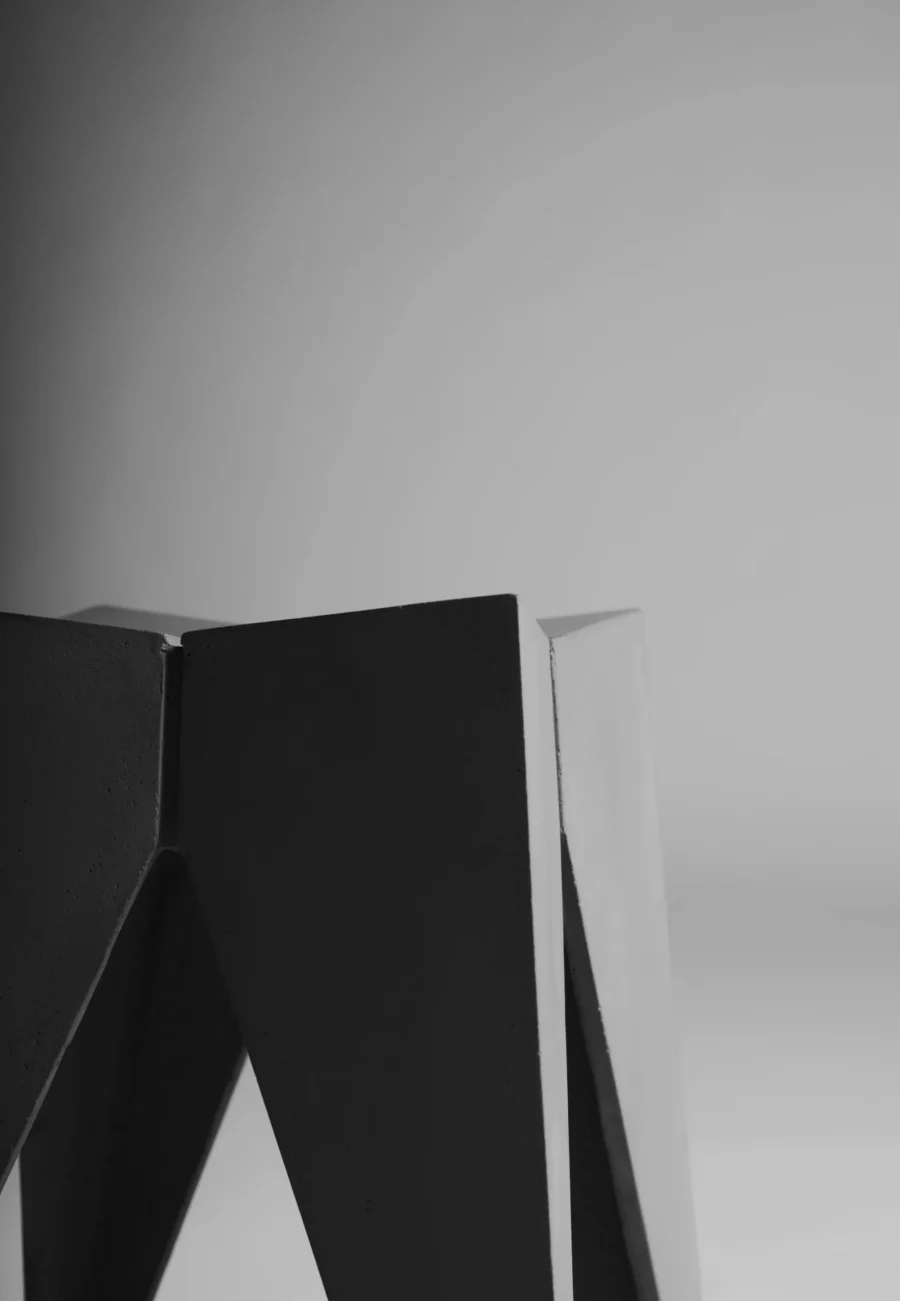
Industrial bathroom with exposed brick wall and concrete design accessories

The durability of brutalist furniture

Concrete lasts. It’s probably its most obvious and least appreciated quality. Brutalist buildings from the 1960s are still standing. Sometimes worn, but standing.


A concrete piece of furniture doesn’t go out of style because it doesn’t follow styles. Its simple form, its material presence, its refusal of ornament give it a permanence that few materials have. It ages, it develops a patina, it keeps its character.


It’s a different way of buying. You don’t buy a concrete piece to replace it in three years.

Close-up of raw concrete texture on a design furniture piece by Lyon Béton

Why it’s coming back now

Brutalist furniture isn’t making a comeback by chance. We’re in a period where many people are looking for objects that mean something, that are made to last, that don’t look like everything else.

Concrete answers that. Not as a trend, but as a different way of thinking about brutalist furniture. At the intersection of design, sculpture, and domestic architecture.

It’s not for everyone. But for those it speaks to, it speaks loudly.

brutalist-furniture-raw-concrete-contemporary-interiors

FAQ — Brutalist design and concrete furniture

What exactly is brutalist design?

A movement that values raw materials, massive forms and visible structure. In furniture, it produces strong-character pieces that are almost sculptural, with no unnecessary ornament.

Is concrete furniture fragile?

No. Concrete used for design furniture is formulated to be resistant while being lighter than construction concrete. These pieces are built to last for decades.

How do you pair brutalist furniture without making the space feel cold?

By mixing it with warm materials. Wood, leather, wool, linen. The balance between mineral and warm textures creates an interesting aesthetic tension. Often, one strong piece is enough to transform a room.

Is brutalist design a trend or a lasting style?

Brutalism has existed since the 1950s. It comes back in cycles because its philosophy — show the material, refuse the artificial — stays relevant regardless of the era.

Where can you find quality brutalist furniture made in France?

Lyon Béton offers a range of design concrete furniture crafted in France, at the intersection of brutalism and contemporary design. Each piece is hand-cast, which guarantees a unique character.