We noticed that you were on the American continent, would you like to be redirected to our US site?
HomeJournal Concrete and wood : the pairing that always works
May 12, 2026
Concrete and wood : the pairing that always works
Concrete and wood : 5 good reasons to combine these 2 materials | Lyon Béton
Concrete and wood : the pairing that always works
Concrete wood decoration is one of the most solid pairings in contemporary interior design. Not a trend. Not a passing fashion. These two materials have been found together in interiors since the 1960s and they still work today for the same reasons.
In matters of concrete wood decoration, concrete is mineral, dense, cold to the touch. Wood is organic, light, warm. Together they create a balance that few other material combinations manage to produce.
1. Concrete wood decoration : the contrast that creates balance
Concrete alone can quickly make a space feel austere. Too much mineral, too much grey, too much visual hardness. Wood corrects that naturally.
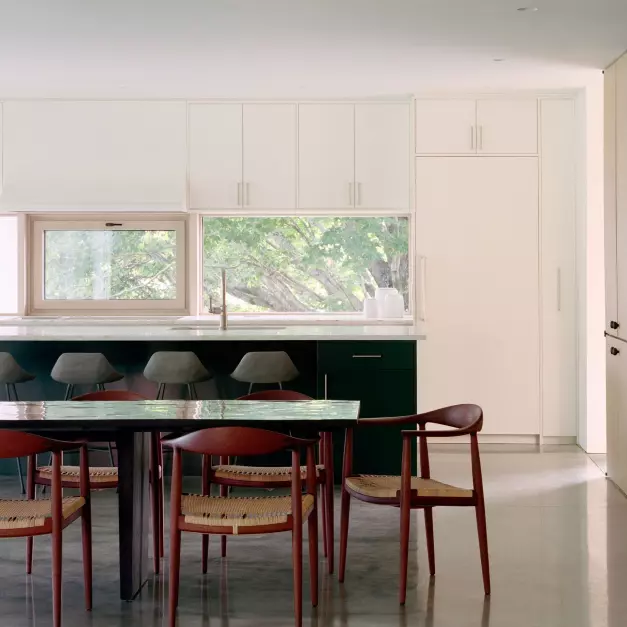
A concrete piece placed on an oak parquet floor reads completely differently. The same piece on polished concrete or tiling will feel colder. It’s the contrast between the two materials that creates the balance. The roughness of concrete softens against the grain of wood.
Concrete wood decoration also works the other way around. An all-wood interior can lack visual structure. A concrete coffee table, a mineral shelf, a massive TV bench come in to anchor the space and give it depth.
2. The two materials share a common philosophy
Concrete and wood share something essential : they show how they were made.
Concrete keeps its surface microbubbles, its tone variations, the irregularities of its casting. Wood keeps its knots, its grain, the traces of the tree it once was. Two honest materials that don’t try to look like anything else.
This shared honesty is what makes them naturally compatible. They don’t compete with each other, they complement each other. Brutalist furniture has long theorised this approach : show the material rather than hide it.
3. The combination works in every interior style
Concrete wood decoration works in an industrial loft. But also in a Haussmann apartment, a contemporary house, a Scandinavian or Japandi interior.
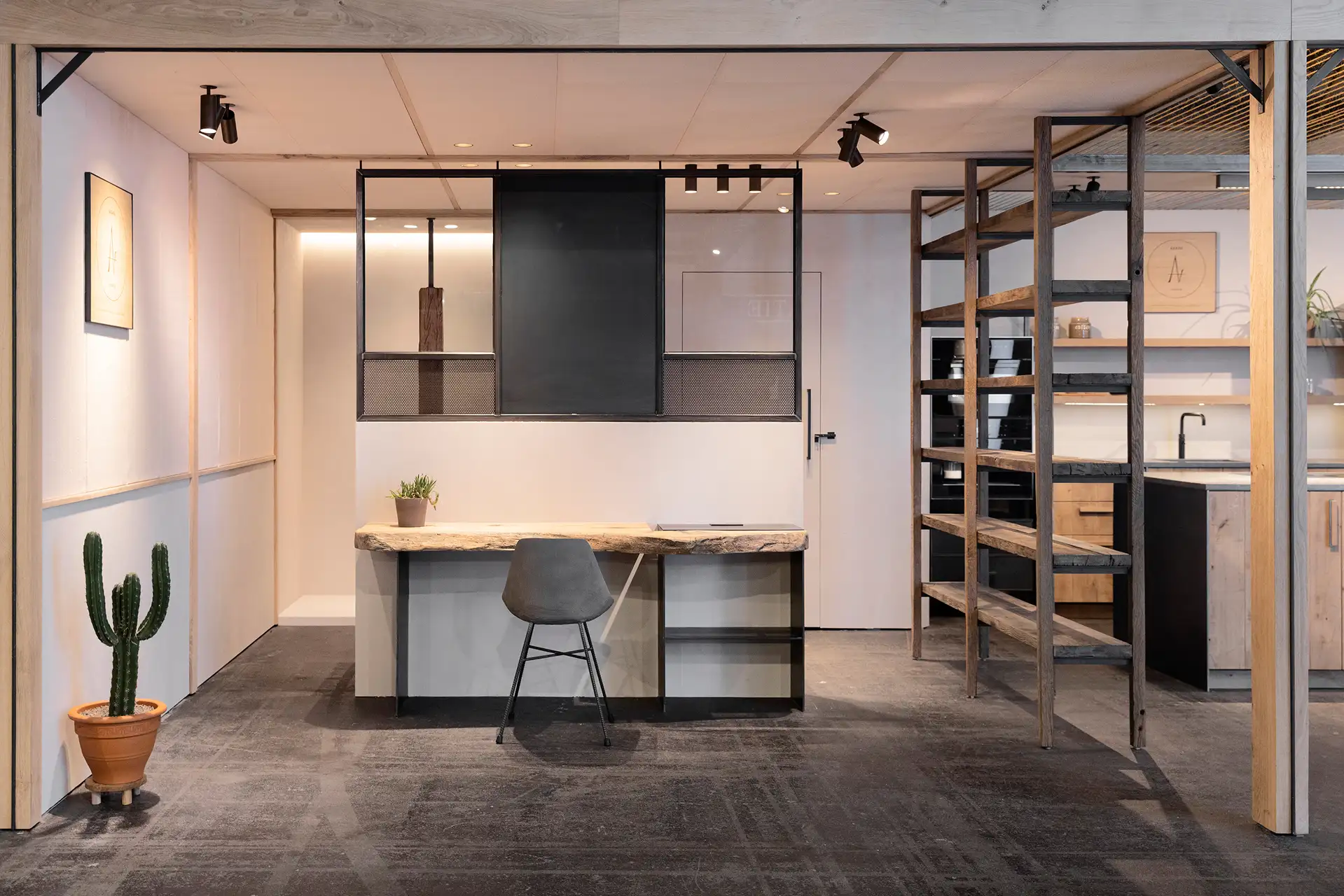
In a loft : raw concrete on the floor or walls, solid or dark-stained wood furniture. The raw character of both materials amplifies each other.
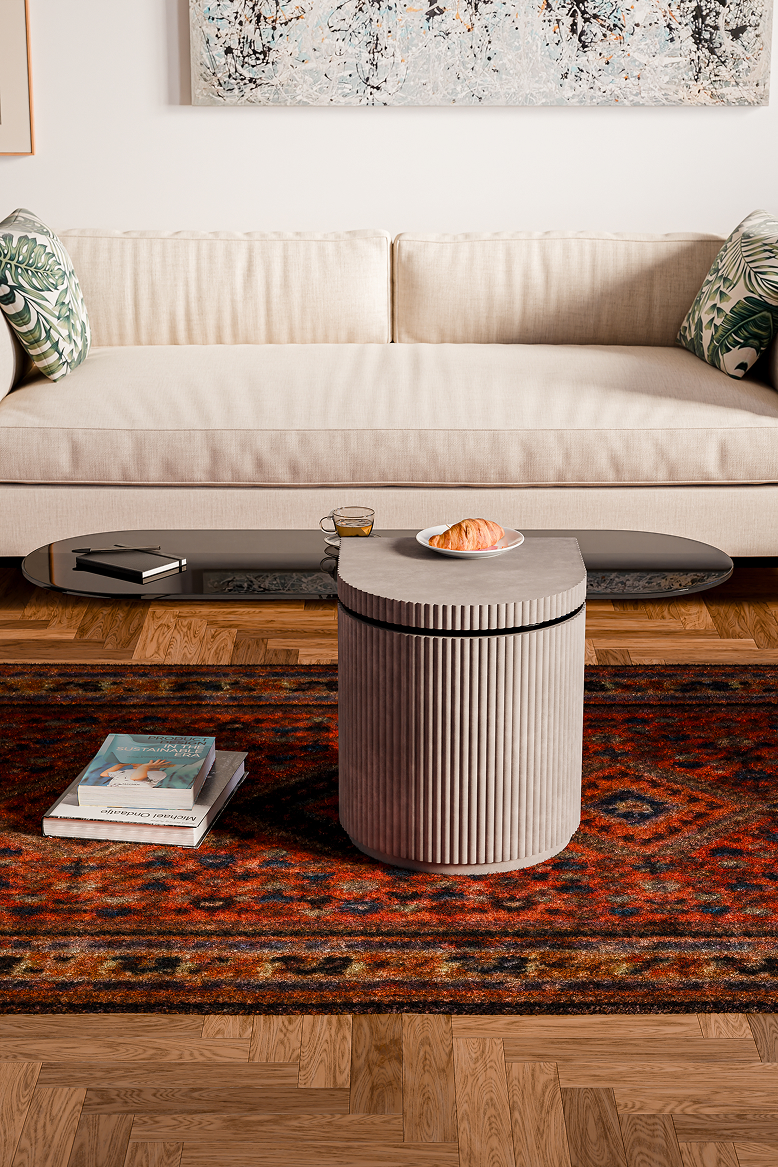
In a Haussmann apartment : herringbone parquet, white mouldings, and a concrete coffee table or mineral shelving system. The contrast between classical and contemporary creates something unexpected and interesting.
In a Scandinavian or Japandi interior : light oak or ash, natural grey concrete. Both materials in their softest tones. It’s the most calming version of the pairing.
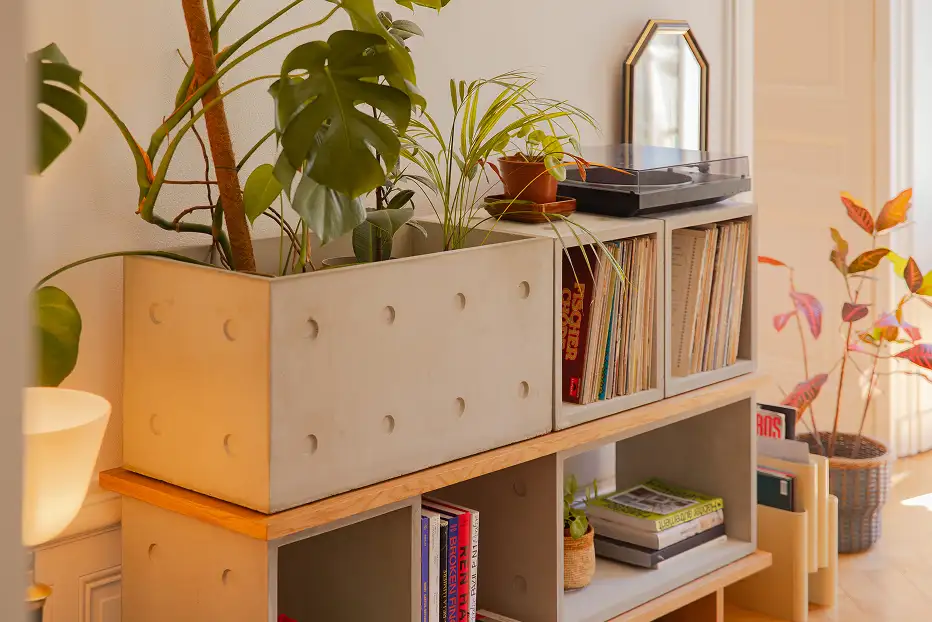
Lyon Béton’s Dice system illustrates this versatility well. The concrete cubes work just as well in a minimalist interior as in a warmer space depending on what surrounds them.
4. How to balance concrete and wood well
Concrete wood decoration doesn’t require perfect balance to the gram, but there are a few rules of thumb that work.
If concrete dominates (polished concrete floor, concrete walls), wood needs to bring warmth through furniture, flooring, accessories. A sofa on a wool rug with a wooden tray on the coffee table is enough to transform the atmosphere.
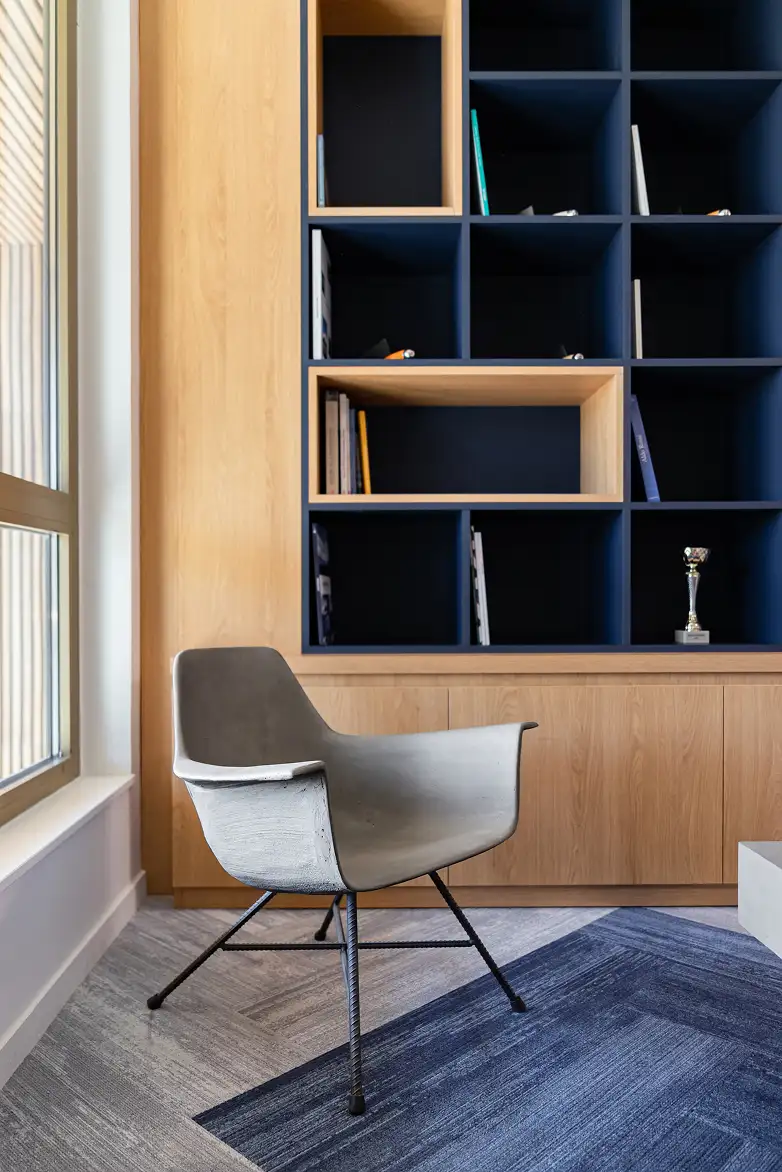
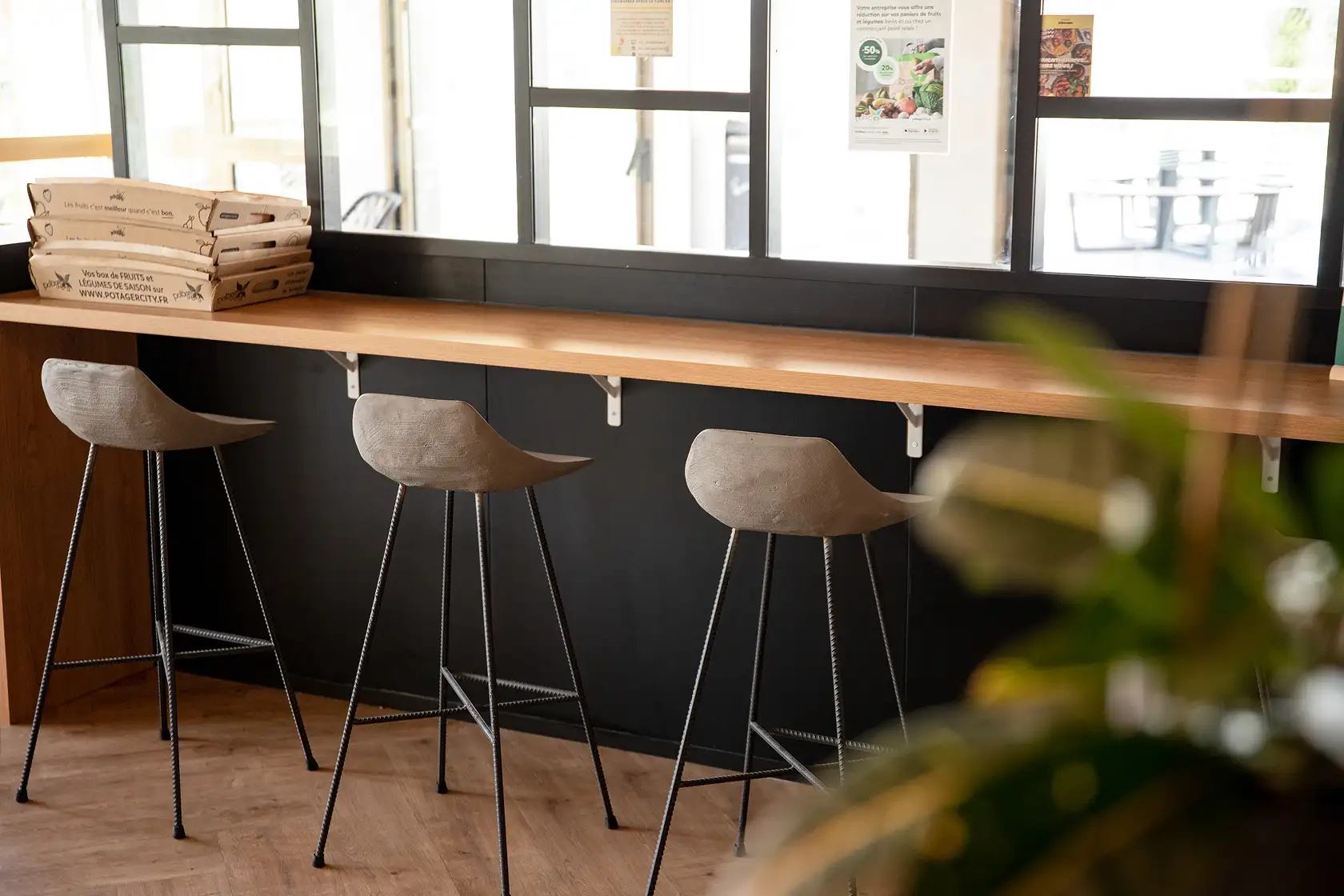
If wood dominates (parquet, solid wood furniture), concrete can come in through touches : a coffee table, a concrete vase, a mineral shelf. A single concrete piece is often enough to give strong character to the whole.
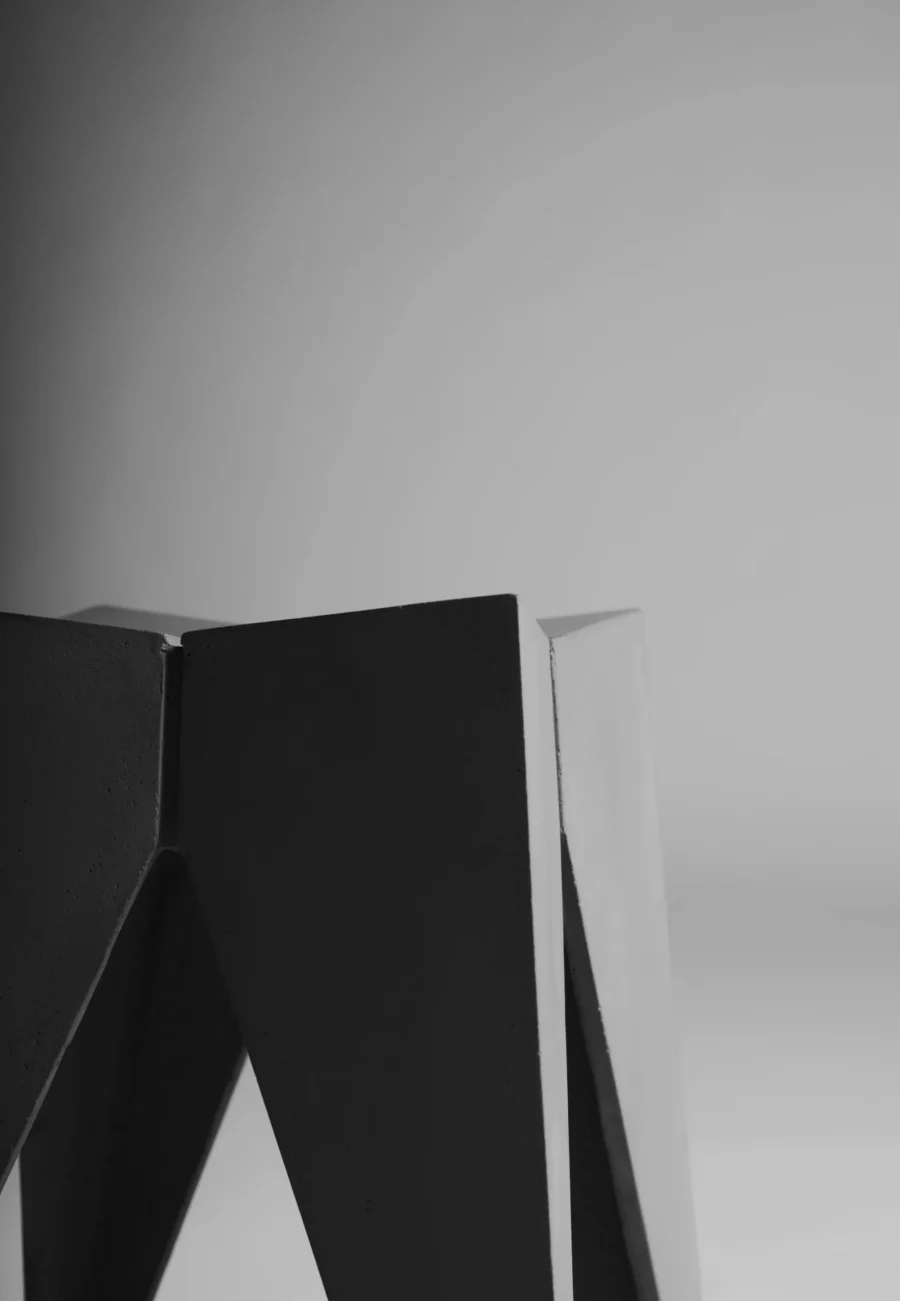
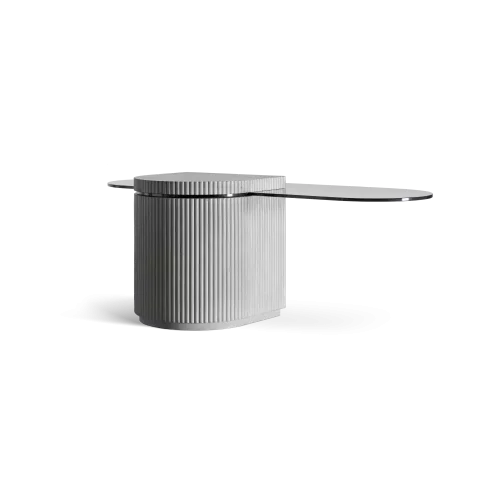
Bertrand Jayr’s Strut coffee table works particularly well in this register. Placed on warm wood parquet, its massive concrete base creates exactly the mineral anchor point the space needs.
5. Concrete wood decoration : combinations to avoid
The pairing works almost every time, but there are a few traps.
Too much dark concrete with very dark wood : the result feels heavy and lacks light. In this case, introduce white or linen to open up the space.
Very smooth concrete and heavily worked wood (mouldings, carvings) : the two materials neutralise each other. Better to choose one as the strong element and let the other play a supporting role.
White concrete and bleached wood : too much neutrality, the space lacks depth. Just one of the two materials in its natural version is enough to give character.
For more on material pairings in contemporary design, Dezeen regularly documents projects combining concrete and natural materials.
FAQ – Concrete and wood
Why do concrete and wood pair so well?
Because they complement each other on every level : concrete is mineral and cold, wood is organic and warm. Visually, texturally and philosophically, they create a natural balance.
What wood to pair with concrete?
Oak is the safe choice : warm, versatile, available in many shades. Walnut brings more depth and richness. Ash and birch, being lighter, suit Scandinavian or Japandi interiors better.
Can you combine concrete and wood in a small room?
Yes. In a small space, a single concrete piece is enough to create the contrast without overwhelming. A coffee table, a shelf or a concrete accessory on a wood floor changes how the space reads without crushing it.
Concrete and wood in a kitchen : good idea?
Excellent idea. Concrete worktops paired with natural wood fronts are one of the most sought-after combinations in contemporary kitchens. Concrete holds up well under heavy use with a good treatment.
How do you maintain concrete furniture in an interior with wood?
The two materials have different but simple maintenance needs. Concrete needs occasional waterproofing treatment. Wood needs an oil or wax depending on the finish. Our concrete furniture care guide covers the recommended products in detail.